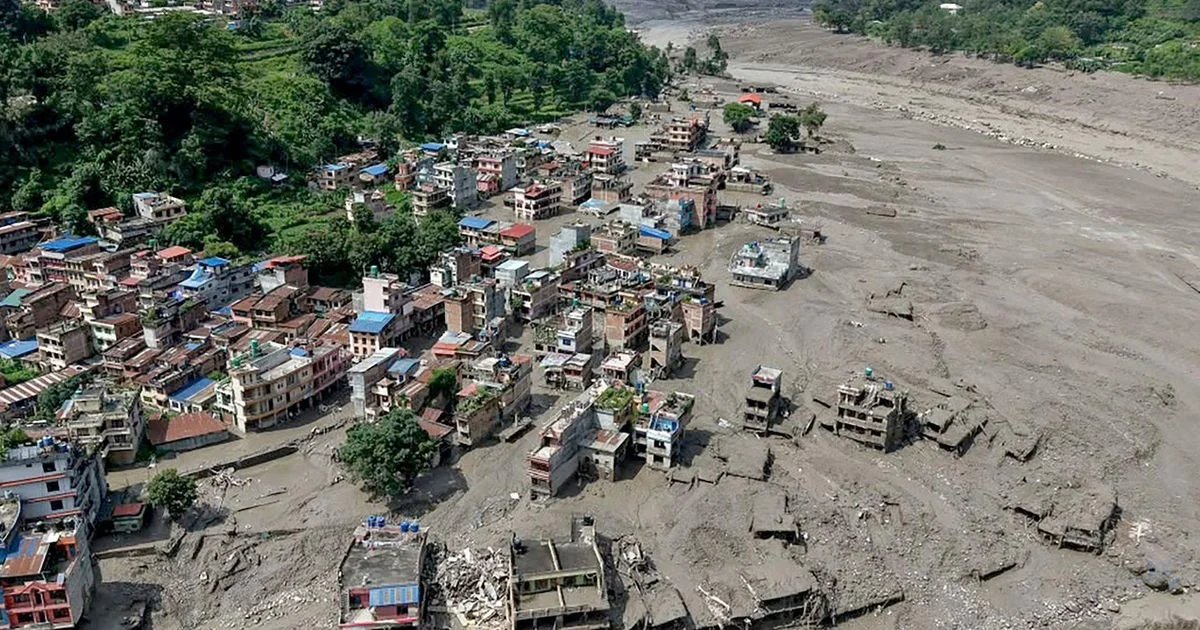
Glacier Collapse Caused Devastating Nepal-Tibet Floods
Scientists confirm a massive glacier collapse caused the Nepal-Tibet flash floods, triggering a 5.2 magnitude impact and killing over 300 people.
Key Takeaways
- →A collapsed Himalayan glacier triggered severe flash floods along the Nepal-Tibet border.
- →Initial reports misidentified the 5.2 magnitude seismic impact as a standard earthquake.
- →The ice-rock avalanche sent debris into the Lende Khola and Bhote Koshi rivers.
- →Downstream river levels surged by up to nine meters within 30 minutes.
- →Scientists highlight rapidly melting Himalayan ice as an urgent climate catastrophe indicator.
Key Takeaways
- A collapsed Himalayan glacier triggered severe flash floods along the Nepal-Tibet border.
- Initial reports misidentified the 5.2 magnitude seismic impact as a standard earthquake.
- The ice-rock avalanche sent debris into the Lende Khola and Bhote Koshi rivers.
- Downstream river levels surged by up to nine meters within 30 minutes.
- Scientists highlight rapidly melting Himalayan ice as an urgent climate catastrophe indicator.
Himalayan Glacier Collapse Triggers Fatal Floods
Preliminary scientific investigations reveal that a massive glacial collapse caused the devastating flash floods along the Nepal-Tibet border. According to reports from BBC News, the catastrophe resulted in at least 389 fatalities and widespread infrastructure destruction.
Initial reports suggested an earthquake caused a landslide. However, the US Geological Survey (USGS) later clarified that a disintegration of glacial ice triggered the event. The physical impact of the ice hitting the valley floor generated a seismic shockwave measuring 5.2 magnitude.
Scientific Analysis and River Surge
Experts from the University of Dundee and the International Centre for Integrated Mountain Development (ICIMOD) analyzed the disaster site near Langtang Lirung peak. Their research indicates that an ice-rock avalanche swept into Lende Khola, a key tributary of the Bhote Koshi river.
Key impact metrics include:
- Rapid Surge: Water levels downstream surged by 7 to 9 meters within 30 minutes.
- Station Destruction: Multiple hydrological monitoring stations were completely washed away.
- Mass Debris Flow: A sudden torrent carried sediment, ice, and massive boulders downstream.
Growing Climate Risks in the Himalayas
This disaster highlights the critical danger of rapidly melting Himalayan ice sheets. Scientists warn that rising global temperatures are accelerating glacial instability, creating severe hazards for high-altitude communities across Asia.
Frequently Asked Questions
What caused the Nepal-Tibet flash floods?
A massive glacier collapse near the Langtang Lirung peak triggered an ice-rock avalanche into local river systems.
Did an earthquake cause the Nepal floods?
No, the 5.2 magnitude seismic signal was created by the physical impact of the collapsing glacier hitting the valley floor.
How fast did the floodwaters rise in Nepal?
Water levels downstream rose between seven and nine meters in just 30 minutes.
Frequently Asked Questions
What caused the Nepal-Tibet flash floods?
Did an earthquake cause the Nepal floods?
How fast did the floodwaters rise in Nepal?
Stay in the loop
Get the latest tech news and AI insights delivered to your inbox. No spam, unsubscribe anytime.
TechVeb Team
Your trusted source for the latest in technology, AI innovations, and digital trends. We bring you in-depth analysis, expert reviews, and comprehensive guides.
Learn more about us →More tech-news News
KP Emergency Declared: Governor's Rule Imposed Under Article 234
Federal government imposes emergency and Governor's rule in KP under Articles 232 and 234 following cabinet approval citing security issues.
Man City's statement win has feeling of irrelevance with season in
Manchester City record what they will view as a statement win at Liverpool - but is it a statement that carries any weight during a Premier League season in...
PM says it is 'clear' Russia interfered with Brexit vote
He says voters were not "sufficiently" informed about how foreign actors sought to disrupt UK democracy.