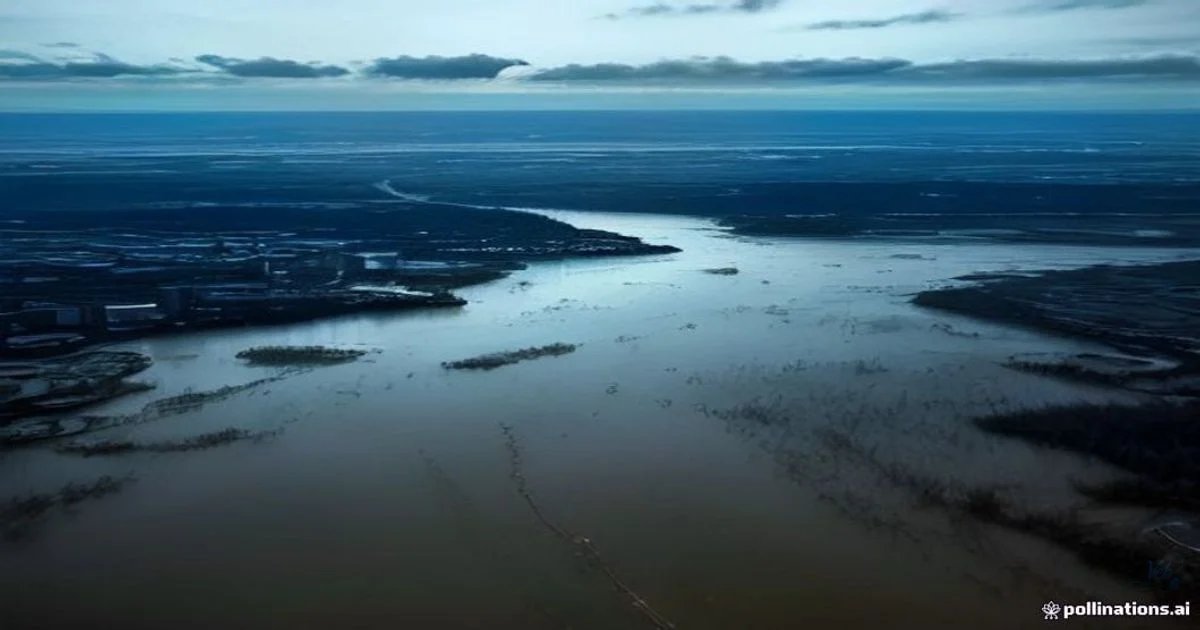
Floods in Nepal, Kashmir and China 2026: causes, blame and what comes next — 73 FAQs
The biggest questions about the August 2026 floods in Nepal, Kashmir and China answered in one place. What caused the Bhote Koshi disaster, who or what is responsible, which barrier lakes could still burst, how climate change fits, and what happens next — 73 clear answers.
→The August 2026 Nepal disaster was a rare glacier- and ice-collapse flood, not a rainfall flood, which made it sudden and deadly.
→Kashmir faced no fresh 2026 flood; its key risks are cloudbursts (2025 Kishtwar) and glacier-related floods as the Himalaya warms.
→China dealt with two threads: the Gyirong side of the Nepal border disaster and separate Typhoon Narra plus monsoon floods.
→A barrier lake on the Bhote Koshi posed a real second-flood risk, peaking around September 1, 2026, before being drained.
→The shared lesson: warmer mountains and weak, cross-border warning systems are raising the frequency of suddenly lethal floods.
The August 2026 floods: a quick orientation
Three flood stories defined late August 2026 in South and East Asia, and they are easy to confuse:
Nepal (Bhote Koshi / Trishuli) — the deadliest: a glacier- and ice-collapse flood on August 26 that killed more than 600 people with thousands missing.
China (Tibet / Gyirong) — the same border disaster on the Chinese side, plus Typhoon Narra and the East Asia monsoon causing separate, widespread flooding across southern China.
Kashmir — no fresh 2026 event, but serious underlying risk: the 2025 Kishtwar cloudburst and the retreating glaciers it shares with the rest of the Himalaya.
The 75 answers below cover what happened, what (or who) caused it, what happens next, and how people can stay safe.
The core facts, in brief
The Nepal disaster began with a high-altitude glacier collapse near the Langtang range. Ice and rock dammed the Bhote Koshi, then broke, sending a wall of mud and water down through Rasuwa, Nuwakot and Dhading. Because the trigger was ice and rock rather than rain, warnings were nearly impossible to send in time. Around 19 bridges, 40 kilometres of road and six hydropower facilities were destroyed. A barrier lake that formed upstream was drained to prevent a second flood.
On the Tibetan side, Gyirong County suffered a mudslide from the same event, with China reporting deaths and hundreds missing. Meanwhile Typhoon Narra and the monsoon flooded populous southern provinces, and China faced criticism over the limited transparency of its Tibet response.
For Kashmir, the honest answer is that there was no fresh 2026 flood like Nepal's — but the valley sits in the same warming mountain belt and must plan for both cloudburst-driven and glacier-driven floods.
Original research and analysis by TechVeb. Compiled from reporting by Reuters, AP, AFP, BBC News, CNN, The New York Times, Xinhua, CCTV, The Kathmandu Post, Al Jazeera, the UN and regional outlets, August 2026.
Frequently Asked Questions
What is the biggest flood story of August 2026?
The deadliest is the Nepal flood of August 26, 2026, triggered by a high-altitude glacier collapse that swept the Bhote Koshi and Trishuli valleys, killing more than 600 people with thousands missing. Related mudslides struck Tibet's Gyirong. Separately, Typhoon Narra and the East Asia monsoon caused widespread flooding across southern China.
When did the Nepal flood disaster happen?
The catastrophic debris flood tore down the Bhote Koshi and Trishuli river system on the morning of Wednesday, August 26, 2026, Nepal local time. Rescue and recovery continued for days afterward.
Where exactly did the Nepal flood strike?
The flood ran through the districts of Rasuwa, Nuwakot and Dhading in central Nepal, devastating towns such as Rasuwagadhi, Syabrubesi and Trishuli Bazar, then spread out around 100 kilometres downstream in Chitwan district.
What rivers were involved in the Nepal disaster?
The surge started in the Lhende Khola, a tributary, and flowed down the Bhote Koshi into the Trishuli river system, part of the watershed that reaches Kathmandu and continues south toward India.
What caused the Nepal flood?
The leading explanation is a high-altitude ice avalanche and partial glacier collapse near the Langtang Lirung and Tsangbu Ri peaks. A mass of rock and ice dammed the river, then gave way, releasing a deadly surge. The precise mechanism remains under investigation.
Was the Nepal flood caused by heavy rain?
No. Unlike ordinary floods, the Nepal disaster was not primarily caused by heavy rainfall. It appears to have been driven by the collapse of ice and rock high in the mountains, followed by a dammed river releasing. This is what made it so dangerous and so hard to forecast.
What is an ice avalanche or glacier collapse?
An ice avalanche is a large mass of glacier ice breaking away and falling, often with rock attached. A glacier collapse is the broad failure of part of a glacier. In Nepal, such a collapse appears to have sent ice and rock into the river, blocking it temporarily.
What is a glacial lake outburst flood (GLOF)?
A GLOF happens when a lake held back by a glacial moraine suddenly releases its water, producing a destructive flood. It is one important mountain flood hazard, though the 2026 Nepal disaster appears to involve a related but distinct ice-avalanche mechanism.
Is the Nepal flood a GLOF?
Most likely not a classic GLOF. Scientists describe the Nepal event as an ice and rock avalanche that dammed the river and then broke, rather than the release of an existing glacial lake. The classification is still being refined as evidence is studied.
How many people died in the Nepal floods?
By August 29, 2026, more than 600 deaths had been confirmed in Nepal, with figures rising as isolated valleys were reached. Earlier counts passed 579 confirmed dead. The toll is still expected to climb.
How many people are missing after the Nepal flood?
More than 3,000 people were unaccounted for at the peak, including a large number of foreign nationals. An official figure at one point reported around 1,924 missing, of whom 517 were foreigners and about 933 were hydropower workers.
How many foreigners died or went missing in Nepal?
Hundreds of foreign nationals were caught up in the disaster, mostly trekkers and pilgrims. Countries reporting missing citizens included India, the United States, the United Kingdom, Ukraine, Malaysia, Canada, Australia, South Korea, South Africa, Portugal and the Netherlands.
Why were so many tourists in the affected area?
The affected valleys lie on the popular route between Kathmandu and Lhasa in Tibet, used by trekkers and by pilgrims heading toward Mount Kailash. The disaster struck at the height of the trekking and pilgrimage season.
What damage did the Nepal flood cause?
Around 19 bridges and 40 kilometres of road were destroyed, six major hydropower and transmission facilities were damaged, and 20 schools were damaged in three districts. Early estimates put property damage at more than 200 billion Nepali rupees, over US$1.3 billion.
Did the flood damage Nepal's hydropower projects?
Yes. The flood damaged at least six major hydropower and transmission facilities and disrupted power supply. About 933 hydropower workers were among the missing, and more than 100 people were feared trapped in a single tunnel at the Trishuli 3A project.
Why was there no warning of the Nepal flood?
Glacier-collapse floods travel in minutes, and the trigger was high on a remote ice cliff in Tibet where monitoring and data are limited. Experts say Nepal's early-warning network and upstream information from China were inadequate for such a sudden, non-rainfall event.
Who is responsible for the missing warning?
There is no single culprit. The overwhelming speed of the event is central. But experts point to limited monitoring of Himalayan ice, China's tight control of data from Tibet, thin in-country instrumentation, and decades of development — including hydropower — placed directly in exposed valleys.
Could an earthquake have caused the Nepal flood?
Nepal's foreign minister initially said an earthquake was reported near the border, but the US Geological Survey found no earthquake in the area. A small M4.2 landslide was recorded, but experts now mostly attribute the catastrophe to glacier and ice collapse rather than a quake.
What role does climate change play in the Nepal floods?
Climate change is warming the Himalayas faster than the global average, driving glacier retreat, thinning ice and destabilising slopes — all of which raise the risk of ice avalanches and lake outbursts. Scientists say it is too soon to pin this specific event on climate change, but the trend is clear.
Is a barrier lake still a risk after the Nepal flood?
A debris dam formed a new barrier lake upstream of the affected area. Chinese water authorities estimated millions of cubic metres could flow into it, with high breach risk peaking around September 1, 2026. Workers excavated a drainage channel and state media later reported the water level dropped around 10 metres and immediate risk eased.
Could there be a second flood in Nepal?
The risk was real. China at one point suspended border rescue operations because of the danger of a second flood from the barrier lake. As the lake was drained and its level fell, the immediate threat reduced, but scientists warned of continued glacier and ice-lake hazards.
How is Nepal responding to the disaster?
Nepal's cabinet declared the affected areas disaster zones for three months, ordered free treatment and emergency aid, and mobilised the army, helicopters and sniffer dogs. More than 4,400 people were rescued and relief supplies were air-dropped to cut-off towns.
Who is helping Nepal with relief?
India offered humanitarian aid and a tunnel-rescue team; Pakistan dispatched emergency relief; the UAE allocated $10 million; Bangladesh offered assistance; and the UN mobilised humanitarian agencies. China pledged support and offered its help in rescue efforts.
What happened to the people trapped in the hydropower tunnel?
More than 100 people were feared trapped inside the Trishuli 3A hydropower project tunnel in Rasuwa district. The Nepali Army sent helicopters and rescue teams, and India offered a specialised tunnel-rescue team, but poor access and locating the tunnel entrances slowed the effort.
How did the Nepal flood affect Kashmiri families?
Kashmiri and other South Asian families were directly affected because many of the missing pilgrims and trekkers came from the region, and because the flood water flows downstream through the shared Himalayan watershed toward the South Asian plains.
What happened in Kashmir in 2026?
There was no confirmed fresh flood disaster in Kashmir in late August 2026 on the scale of Nepal's. Kashmir's most recent severe flood was the August 2025 cloudburst at Chositi village in Kishtwar district of Indian-administered Jammu and Kashmir.
What happened in the 2025 Kashmir cloudburst?
On August 14–15, 2025, a cloudburst near Chositi village in Kishtwar district triggered flash floods and landslides that killed at least 56 people, left scores missing, and swept away homes and a pilgrim community kitchen. More than 300 people were rescued.
Is Kashmir at risk of a Nepal-style glacier flood?
Kashmir shares the same warming Himalayan belt and has its own retreating glaciers, so the risk exists, but its more common and immediate flood danger comes from intense cloudburst rain on steep slopes. Both mechanisms deserve serious planning.
What is a cloudburst?
A cloudburst is an extremely intense burst of rainfall over a very small area in a short time. It funnels water off steep slopes into gullies instantly, causing flash floods and landslides — the mechanism behind the 2025 Kishtwar disaster and many Himalayan tragedies.
Why are cloudbursts becoming more common in Kashmir?
Experts link rising cloudburst frequency partly to climate change, while the damage they cause has grown due to unplanned development in mountain regions. Kishtwar also hosts hydroelectric projects long warned to threaten the fragile area's ecosystem.
When was Kashmir's worst flood?
Kashmir's most famous flood is the catastrophic September 2014 event, when the Jhelum and its tributaries overflowed and inundated large parts of Srinagar, killing hundreds and displacing more than a million people.
Where does Himalayan floodwater flow next?
Himalayan floodwater crosses borders. The 2026 Nepal flood flowed down the Trishuli and Narayani into India. Kashmir's Jhelum carries water toward the plains, so upstream rain and glacier melt can raise flood risk well beyond the valley.
How do Nepal and Kashmir flood risks differ?
Nepal's 2026 disaster was driven by a sudden glacier and ice collapse. Kashmir's greatest dangers are cloudburst-driven flash floods and, as glaciers retreat, glacial lake outburst floods. Both are magnified by the same warming Himalayan environment.
What is being done about Kashmir's flood risk?
Authorities monitor rivers and weather, and experts urge faster early-warning networks, better land-use rules that keep settlements out of dry riverbeds and gullies, cross-border data sharing, and public education, since valley water can rise extremely fast.
What happened in China's Gyirong, Tibet in 2026?
On August 26, 2026, the same glacier-collapse disaster that hit Nepal sent a wall of mud and debris over the border into China's Tibet Autonomous Region, severely damaging Gyirong County and its border trade hub. China reported at least five deaths and hundreds missing in the area.
Was the Gyirong mudslide the same event as the Nepal flood?
Yes. Chinese officials identified the Gyirong mudslides as caused by a high-altitude glacier collapse in Nepal. The same disaster struck both sides of the Nepal–China border, with Nepal suffering the far greater human toll.
What is Typhoon Narra?
Typhoon Narra is a tropical cyclone that struck southern China in late August 2026, bringing record flood waters and forcing tens of thousands of evacuations across Guangxi, Guangdong, Hainan and Fujian, while also battering northern Vietnam.
Did China have floods beyond the Tibet disaster in 2026?
Yes. China had a difficult 2026 flood season. In addition to Typhoon Narra, torrential rains in the southwest caused a house collapse and landslide in Sichuan, and the East Asia monsoon brought red alerts across several provinces, flooding parts of Hunan and Chongqing.
Why was rescue in Gyirong so difficult?
The mudslide destroyed bridges, roads and the border trade hub. Authorities paused operations in the worst-hit area over the risk of a second flood from a barrier lake, and state media warned of many hidden glacier, ice-lake and geological dangers around the disaster zone.
How is China responding to its 2026 floods?
President Xi Jinping chaired a meeting of top leaders on rescue operations, Premier Li Qiang was dispatched to Gyirong, and the People's Liberation Army joined the response. State media reported heavy rescue work, barrier-lake draining and large-scale evacuations.
Does censorship affect China's flood response?
Journalists and researchers noted China tightly controls information from Tibet, limiting what was known about casualties and conditions in Gyirong, and that restricted data sharing makes cross-border Himalayan preparedness harder. This transparency gap drew criticism.
What are China's 'sponge cities'?
The sponge city initiative, launched in 2015, aims to help cities absorb rainwater using permeable surfaces, restored wetlands and storage ponds. Results have been patchy; rapid urban growth and more intense rainfall have overwhelmed drainage in many places.
How did Nepal and China coordinate their response?
Leaders on both sides discussed the response, China offered assistance to Nepal, and both countries shared warnings about the barrier lake. But researchers said stronger, faster cross-border data sharing on glaciers and rivers would greatly improve future preparation.
Which organisation is coordinating the Nepal relief effort?
The Nepal government leads the response through its Disaster Risk Reduction and Management Authority, supported by the UN and humanitarian partners including OCHA, plus national rescue teams from several countries.
How fast did the Nepal flood travel?
Glacier-collapse floods move extremely fast — in this case the surge came down steep, narrow valleys within a short time of the ice giving way, giving residents only minutes to act. This speed is why warnings are so hard to broadcast in time.
Could better monitoring have saved lives in Nepal?
Better monitoring could have helped, but the event's speed limited the window. Scientists say more automatic weather stations, river-level sensors, satellite tracking of glacial lakes and steep ice, and shared early warnings across borders would all improve response time.
What should people in flood-prone Himalayan valleys do?
Heed weather and river-level warnings, know evacuation routes, avoid camping or sleeping in dry riverbeds and gullies during monsoon season, keep emergency supplies ready, and treat warnings seriously, because mountain water can rise and move extremely fast.
Why are Himalayan glaciers melting faster?
The Hindu Kush Himalaya is warming faster than the global average, accelerating glacier melt and retreat. This thins ice, destabilises slopes, grows moraine-dammed lakes, and increases both cloudburst-driven and glacier-related flood hazards.
What are the main types of mountain flood hazard?
The main ones are: flash floods and landslides from cloudbursts; glacial lake outburst floods (GLOFs); ice and rock avalanches that dam and release rivers; monsoon river floods; and typhoon- or cyclone-driven coastal floods.
How many people live at risk from Himalayan floods?
The Hindu Kush Himalaya is home to hundreds of millions of people, and its rivers supply water downstream to more than a billion people in South and Southeast Asia. Even small errors in flood prediction can affect enormous populations.
Was 2026 an unusually bad flood year?
2026 brought an unusually deadly combination: a rare glacier-collapse catastrophe in Nepal, a damaging typhoon, monsoon floods across southern China, and continued pressure from a warming climate. It underscored that both sudden mountain events and widespread rainfall floods are threats.
What lessons should governments learn from 2026?
Invest in faster early-warning systems, monitor glaciers and ice lakes from space, share data across borders, keep critical infrastructure out of the most exposed valleys, plan land use to avoid flood zones, and treat climate-driven extremes as a permanent condition, not a surprise.
Will more Nepal-style floods happen in the future?
As Himalayan glaciers warm and thin, the risk of ice avalanches and lake outbursts is increasing. Scientists expect events like this to become more frequent, making monitoring, early warning and resilient infrastructure more urgent than ever.
Should tourists avoid the Nepal–Tibet border region now?
After a major disaster with a barrier-lake risk and ongoing rescue, travellers should heed official travel advice from their governments and local authorities, which may restrict access to affected areas while the risk of secondary flooding and unstable slopes remains.
What is the Role of the UN in the Nepal floods?
The UN, through OCHA and agencies on the ground, supports government-led relief, helps assess needs, and coordinates humanitarian assistance. The UN reports some 10,000 households were in need of immediate relief after the flood.
How are families of the missing getting information?
Authorities and hospitals have set up assistance centres, and countries are running helplines for families of missing nationals. Relief agencies are helping families searching for relatives in hospitals in Kathmandu and the affected districts.
What is a disaster zone declaration?
A disaster zone declaration is an official designation that triggers emergency powers, funding and special relief rules. Nepal declared the flood-hit areas disaster zones for three months to enable faster and broader response.
Did the Nepal flood affect electricity supply?
Yes. The flood damaged several hydropower and transmission facilities, disrupting power supply across the affected area and worsening the hardship for residents and rescue operations.
What is the difference between a flood and a debris flow?
A flood is high water. A debris flow is a fast-moving mixture of water, mud, rocks and trees. The Nepal event was a debris flood — extremely dense and destructive — which is why it tore down buildings 'like toothpicks'.
How is the Nepal death toll verified?
Authorities verify bodies recovered by rescue teams, police and district administrators as they reach affected areas. The toll rises slowly because many valleys are cut off, and remains incomplete while hundreds are still missing and unaccounted for.
What happens to the water after the Nepal flood?
The flood water continued downstream through the Trishuli into the Narayani river and toward India. Some water also pooled in a barrier lake upstream, which authorities drained to reduce the risk of a second, sudden release.
Who are the major hydropower operators affected?
The flood damaged projects along the Bhote Koshi and Trishuli, including the Trishuli 3A hydropower project where people were trapped in a tunnel. Multiple operators and the transmission grid were affected, with damage to six major facilities reported.
What safety advice applies to Kashmir's monsoon season?
Residents should avoid dry riverbeds and gullies during storms, move to higher ground if water rises, follow official warnings, and prepare emergency kits. Cloudburst water can arrive with little warning, so readiness matters more than reaction.
How are floods in Pakistan and South Asia related to the Himalaya?
Pakistan and South Asia receive Himalayan meltwater and monsoon rain through rivers that begin in the same mountain chain. Heavy Himalayan rain or glacier floods can raise river levels across borders, as seen in regional floods that killed hundreds in 2015 and in Pakistan's own monsoon losses.
What is the 'Hindu Kush Himalaya'?
It is the mountain system spanning Afghanistan, Pakistan, India, Nepal, Bhutan, China and others, containing vast glaciers that feed major rivers. It is one of the world's most climate-sensitive regions and is warming faster than the global average.
Could the Nepal disaster affect global tourism to the region?
Tourism to Nepal had been recovering, and a disaster of this scale, with hundreds of foreign trekkers and pilgrims affected, could deter short-term travel while raising longer-term questions about safety and monitoring in the mountain region.
What are the long-term recovery needs in Nepal?
Beyond rescue, Nepal needs to rebuild bridges and roads, restore power and water, recover and identify bodies, support displaced families, rebuild schools, and strengthen disaster monitoring so a similar event is better handled in future.
How can international donors help Nepal now?
Donors can fund relief supplies, medical care and shelter, support search and recovery, contribute to rebuilding infrastructure, and invest in the glacier and flood monitoring systems that experts say are the best defence against a repeat catastrophe.
What technology can improve Himalayan flood warnings?
Satellite radar and optical monitoring of glaciers and lakes, automatic river gauges, drones with 3D and thermal imaging, and AI-based flood modelling can help. But the fundamentals are monitoring, fast communication and community readiness.
Is the climate emergency making these floods worse?
The overwhelming scientific view is that a warming climate is increasing both extreme rainfall and the instability of glaciers and slopes, raising the frequency and severity of the hazards behind these floods, even though no single event can be blamed on it alone.
What should I do if I read conflicting flood news?
Cross-check numbers against multiple credible outlets and official agencies, remember that casualty figures change by the hour during a response, and treat rapid toll updates with caution until they are confirmed by authorities.
How many total deaths across the three regions in 2026?
Nepal alone reported more than 600 deaths, Tibet at least five, and China's other flood events killed additional people in separate incidents, such as ten in a Sichuan house collapse and landslide. Exact combined figures are still evolving.
What is the single most important flood safety message?
Never underestimate how fast mountain water can rise and move. Move to higher ground at the first official warning, avoid dry riverbeds and gullies, and never try to cross fast-moving floodwater on foot or in a vehicle.
Stay in the loop
Get the latest tech news and AI insights delivered to your inbox. No spam, unsubscribe anytime.
Your trusted source for the latest in technology, AI innovations, and digital trends. We bring you in-depth analysis, expert reviews, and comprehensive guides.