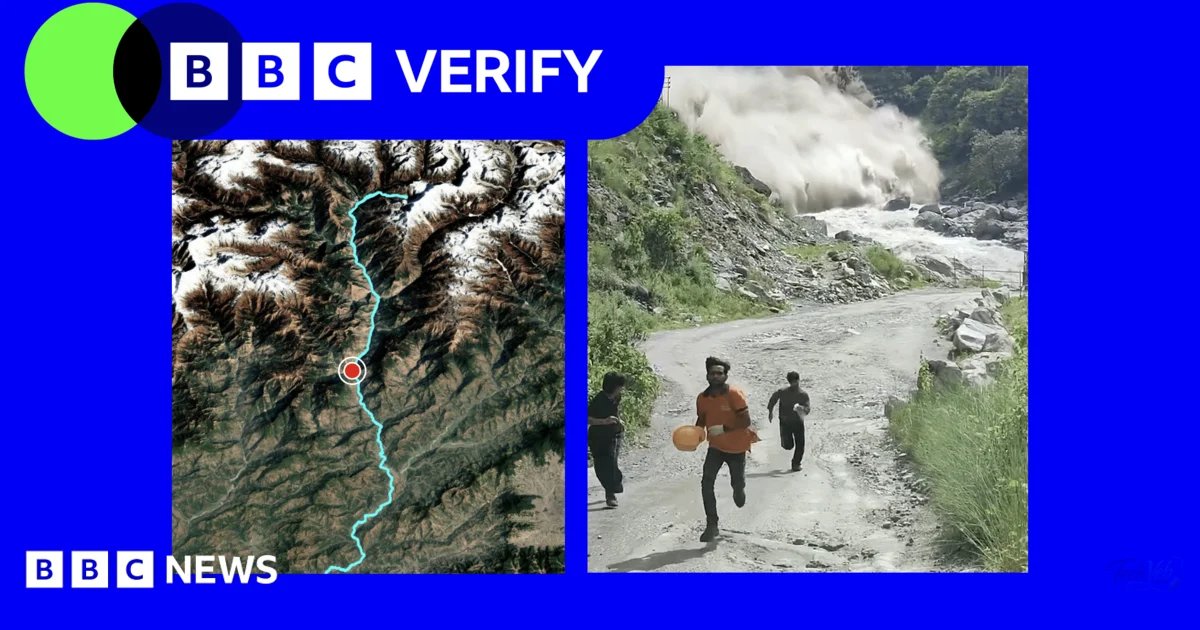
Nepal-Tibet Flash Flood Path Traced by Satellite Tech
BBC Verify uses satellite imagery and video verification to trace the deadly Nepal-Tibet flash flood path that destroyed towns and killed hundreds.
Key Takeaways
- →Catastrophic flash floods hit the Nepal-Tibet border, causing massive loss of life.
- →BBC Verify mapped the flood's path using satellite imagery and geolocated videos.
- →Critical infrastructure, including vital bridges and entire towns, was completely destroyed.
- →Hundreds of fatalities and missing persons have been reported in affected areas.
- →Open-source technology is playing a key role in tracking remote natural disasters.
Key Takeaways
- Catastrophic flash floods hit the Nepal-Tibet border, causing massive loss of life.
- BBC Verify mapped the flood's path using satellite imagery and geolocated videos.
- Critical infrastructure, including vital bridges and entire towns, was completely destroyed.
- Hundreds of fatalities and missing persons have been reported in affected areas.
- Open-source technology is playing a key role in tracking remote natural disasters.
Satellite Tech Maps Deadly Nepal-Tibet Flash Flood
A catastrophic flash flood has devastated the border region between Nepal and Tibet, leaving hundreds dead and hundreds more missing. Torrential water flows destroyed entire towns and swept away critical bridge infrastructure.
To understand the full scope of the disaster, investigative journalists at BBC Verify utilized advanced satellite imagery and video verification techniques to map the precise trajectory of the surge.
Open-Source Tech Exposes Scale of Destruction
Disaster verification teams analyzed high-resolution satellite captures alongside user-generated content from social media to track the water flow. Key findings from the imagery analysis include:
- Complete submersion and structural destruction of remote border settlements.
- Severe damage to major transit routes, including washed-away bridges.
- Landslides triggered by rapid water accumulation along steep mountain valleys.
The Growing Importance of OSINT in Disaster Relief
Modern open-source intelligence (OSINT) and geospatial satellite tracking have become vital tools for assessing hard-to-reach crisis zones. When landslides block ground access, remote sensing provides rapid situational awareness for international aid efforts.
The original investigation was reported by Merlyn Thomas and produced by Aisha Sembhi for BBC News, featuring graphic analysis by Mesut Ersoz and verification by a specialized data team.
Frequently Asked Questions
How did journalists trace the Nepal-Tibet flash flood?
BBC Verify utilized high-resolution satellite imagery and geolocated video footage to map the exact path of the flood.
What caused the damage along the Nepal-Tibet border?
A severe flash flood swept through the region, destroying key infrastructure, bridges, and entire residential towns.
How many casualties were reported in the Nepal-Tibet floods?
Official reports indicate hundreds of people dead and hundreds more missing across the border region.
Frequently Asked Questions
How did journalists trace the Nepal-Tibet flash flood?
What caused the damage along the Nepal-Tibet border?
How many casualties were reported in the Nepal-Tibet floods?
Stay in the loop
Get the latest tech news and AI insights delivered to your inbox. No spam, unsubscribe anytime.
TechVeb Team
Your trusted source for the latest in technology, AI innovations, and digital trends. We bring you in-depth analysis, expert reviews, and comprehensive guides.
Learn more about us →More tech-news News
KP Emergency Declared: Governor's Rule Imposed Under Article 234
Federal government imposes emergency and Governor's rule in KP under Articles 232 and 234 following cabinet approval citing security issues.
Man City's statement win has feeling of irrelevance with season in
Manchester City record what they will view as a statement win at Liverpool - but is it a statement that carries any weight during a Premier League season in...
PM says it is 'clear' Russia interfered with Brexit vote
He says voters were not "sufficiently" informed about how foreign actors sought to disrupt UK democracy.